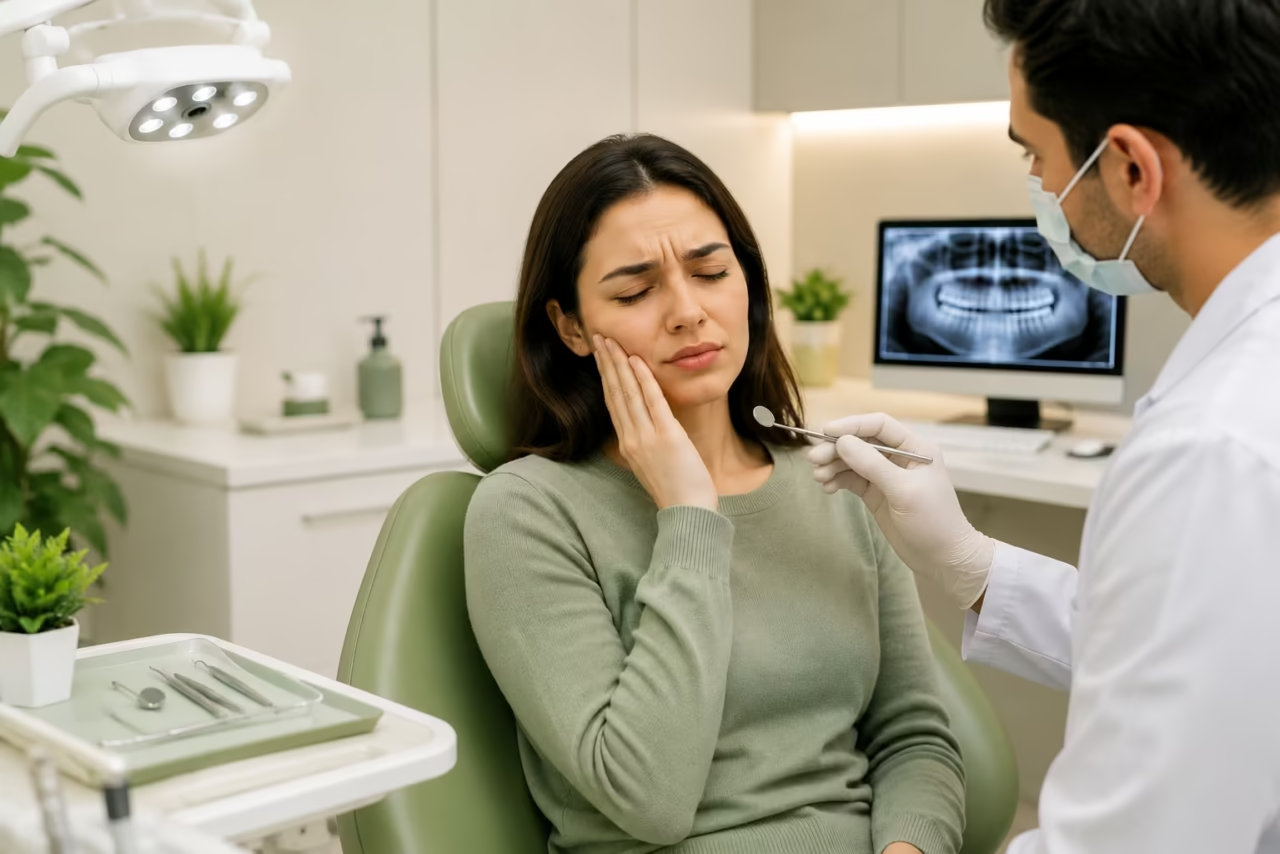
Tooth pain can be confusing.
One day it is a slight reaction to cold water. Then you notice discomfort while chewing. A week later you are awake at night wondering why one tiny tooth can make your entire face feel miserable.
Naturally, people start searching things like how to stop tooth pain fast, root canal treatment in Lahore or whether a painful tooth needs extraction.
The difficulty is that pain does not tell you exactly what treatment you need.
A filling, root canal and extraction solve very different levels of dental damage.
Why Tooth Pain Happens
Toothache can develop for several reasons including decay, infection, cracks and problems involving the tissues around a tooth.
Sometimes the pain is brief and triggered by something cold or sweet. Sometimes it throbs without any obvious trigger. The pattern can give a dentist useful clues but it cannot replace an examination.
That is why treating tooth pain only with painkillers can create false reassurance.
The pain may become quieter while the underlying problem remains.
When a Filling May Be Enough
A filling is usually considered when tooth decay or structural damage can be repaired while the inner pulp of the tooth remains healthy enough to preserve.
The damaged area is removed and the tooth is restored using a filling material.
This is one reason early diagnosis matters so much. A relatively small cavity may need straightforward restorative treatment. Once infection reaches deeper into the tooth, a filling alone may no longer solve the problem.
So the difference between “I need a filling” and “I need a root canal” is not usually about how brave someone is willing to be.
It is about how far the disease has progressed.
When Root Canal Treatment Becomes Necessary
Inside every tooth is soft tissue called pulp containing nerves and blood vessels.
If this tissue becomes infected or severely damaged, root canal treatment may be recommended to remove the affected pulp while keeping the outer tooth.
During root canal treatment the dentist accesses the inside of the tooth, removes infected tissue, cleans and shapes the internal space and seals it.
This surprises a lot of patients because root canal treatment is sometimes spoken about as if it removes the tooth.
It does the opposite.
The goal is generally to save the natural tooth rather than extract it.
When Extraction May Be Considered
Not every damaged tooth can be restored predictably.
A dentist may discuss extraction when a tooth is too badly broken, has severe structural damage or cannot reasonably be restored to comfortable function.
Extraction is therefore not simply the “faster version” of root canal treatment.
Removing a tooth creates another decision afterwards because the missing space may need replacement with an implant, bridge or denture.
Saving a restorable natural tooth and removing a non-restorable tooth are two very different clinical situations.
Filling vs Root Canal vs Extraction
This is the comparison patients usually want in plain language.
A filling repairs a tooth where damage remains manageable and deeper infection has not made simple restoration insufficient.
A root canal treats infection or serious damage inside a tooth while attempting to retain that tooth.
An extraction removes the tooth when keeping it is no longer considered the appropriate option.
Pain alone cannot tell you which of these three is needed.
Someone with severe pain does not automatically need extraction. Someone with mild pain does not automatically have a small problem either.
Diagnosis decides.
Warning Signs That Need Dental Attention
Do not rely on home remedies for weeks when symptoms keep returning.
Book an examination when you notice:
- Persistent toothache
- Pain while biting
- Increasing sensitivity
- Swelling around a tooth or gum
- Repeated night pain
- A broken or badly damaged tooth
Dental infections can become more complicated when left untreated. Root canal treatment is specifically designed to remove infection from inside a tooth and seal the space afterwards.
Why Accurate Diagnosis Matters
The best treatment is usually the least complicated treatment that properly solves the problem.
That sounds obvious, but patients sometimes arrive convinced they already need a specific procedure because of something they read online.
A proper dental examination changes that conversation.
The dentist can assess decay depth, tooth structure and signs of infection. Imaging may be used where appropriate to see areas that are not visible during a normal examination.
GloSmile offers general dental examinations and restorative treatments including root canal therapy within its Lake City facility.
Where GloSmile Fits In
If tooth pain is interfering with eating, sleeping or everyday life, the goal at GloSmile is to identify the cause before deciding on treatment.
Sometimes the answer is simpler than the patient feared.
Sometimes it needs more attention.
Either way, knowing is better than spending another week trying to silence the pain without understanding it.
FAQs
Does severe tooth pain always mean I need a root canal?
No. Several dental problems can cause pain. Examination and imaging where appropriate are needed before deciding on treatment.
Is root canal treatment meant to save the tooth?
Yes. Root canal treatment removes infected or damaged tissue from inside the tooth so the remaining tooth can be retained and restored when clinically possible.
Why not simply extract a painful tooth?
Extraction permanently removes the tooth and may create a need for replacement later. If a tooth can be predictably restored, preserving it may be considered.
Does GloSmile offer root canal treatment in Lahore?
Yes. Root canal treatment is part of GloSmile’s dental services in Lake City Lahore.
Can I book if I am currently having tooth pain?
Yes. Appointments can be requested online or by phone for dental assessment at GloSmile.
Contact
If you have any questions regarding our treatments or services, feel free to email us at info@glosmileclinic.com or call us at +92 325 9113333.
Disclaimer: Above information is subject to change and represent the views of the author. It is shared for educational purposes only. Readers are advised to use their own judgement and seek specific professional advice before making any decision. GloSmile Clinic is not liable for any actions taken by reader based on the information shared in this article. You may consult with us before using this information for any purpose.